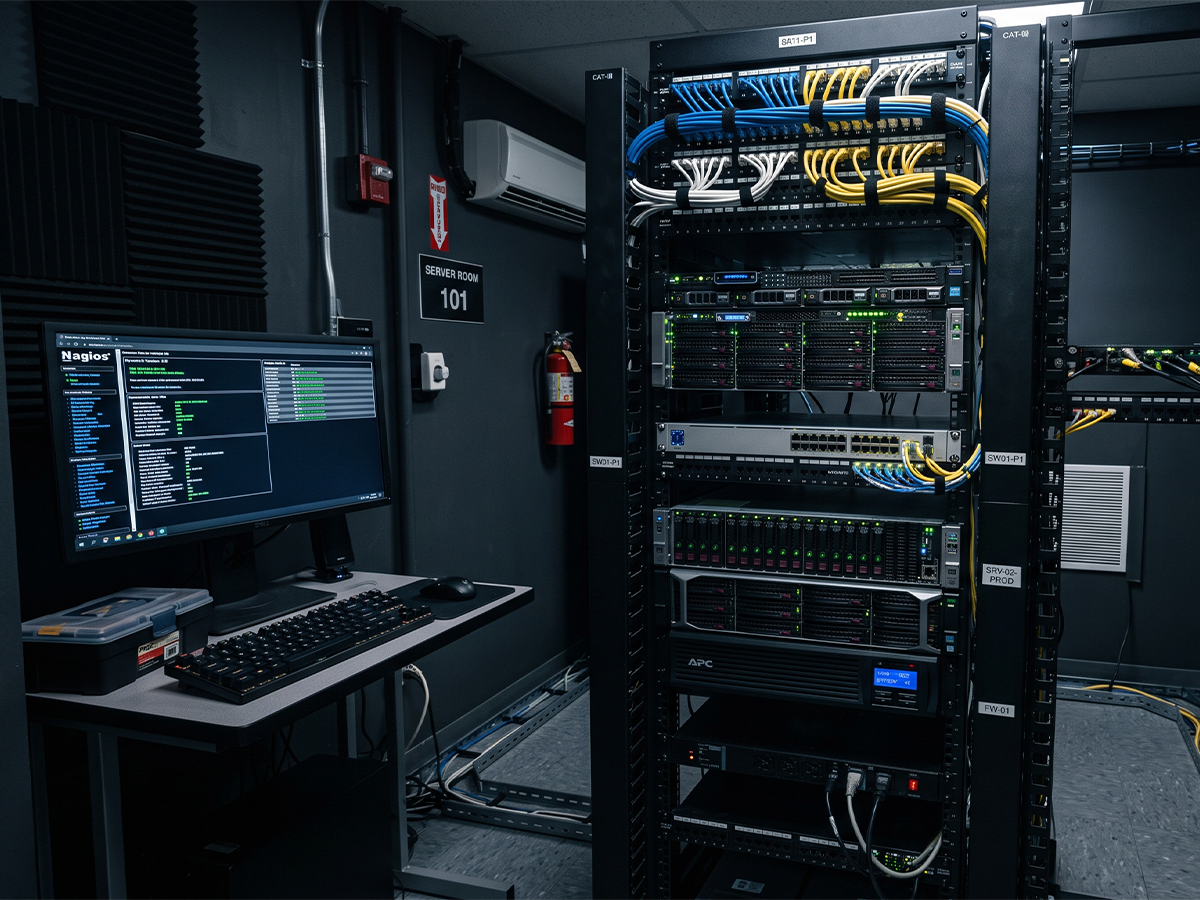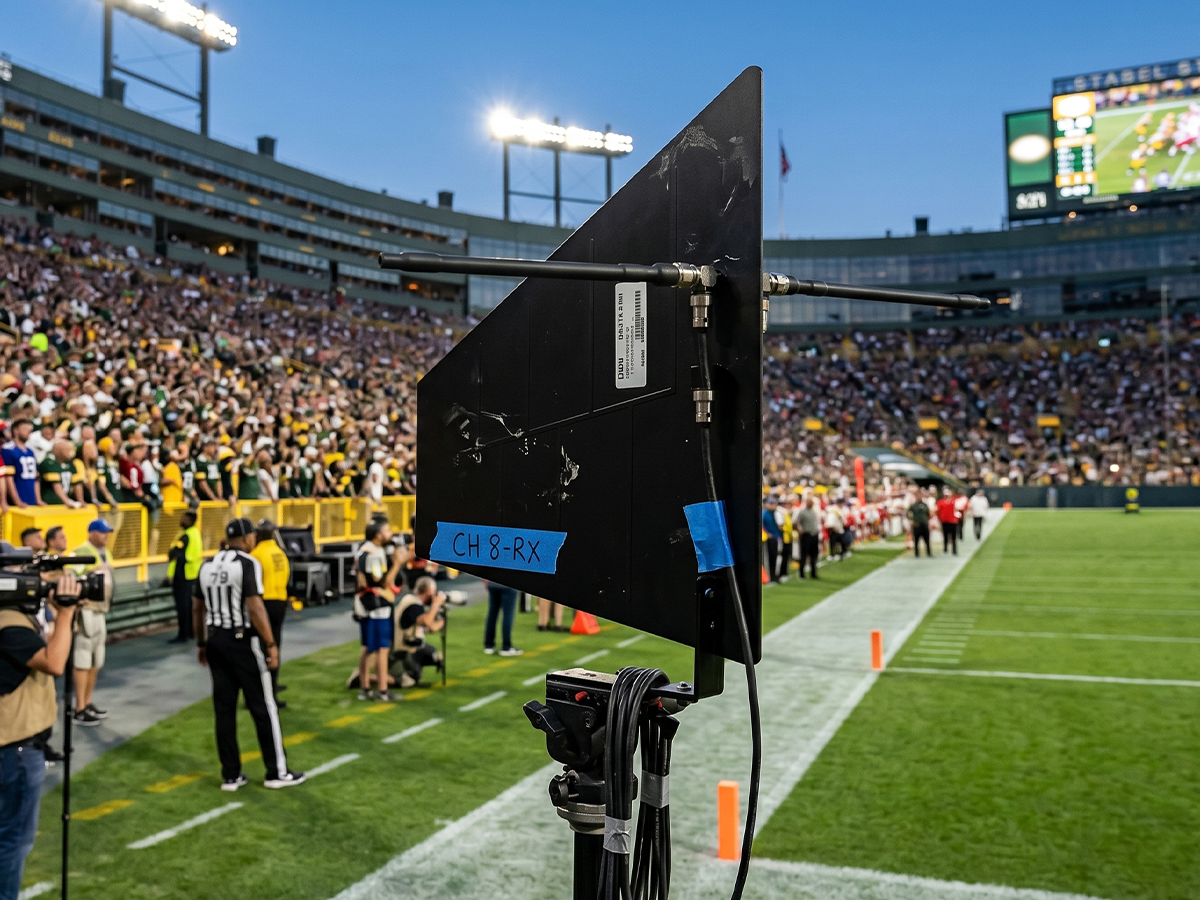


As wireless systems take on larger and more complex production demands, RF infrastructure is being asked to do more than ever. Major sports broadcasts, touring productions, corporate events, houses of worship, campuses, and large venues all face a similar challenge: microphones, IFBs, IEMs, and intercoms need to work reliably across bigger spaces, longer distances, and more crowded spectrum.
That was the focus of Dale Pro Audio’s recent webinar on RF over fiber, featuring Henry Cohen of CP Communications and Radio Active Designs, Geoff Baynard of DPA Microphones / Wisycom, and Richard Stockton of RF Venue. Together, they walked attendees through the fundamentals, the practical system-design considerations, and the real-world benefits of moving RF over fiber instead of relying entirely on coaxial cable.
The biggest takeaway was clear: RF over fiber is not a magic fix, but when it is designed correctly, it can solve coverage problems that are difficult, expensive, or impractical to address with copper alone.
Why RF Over Fiber?
Traditional coaxial cable still has an important place in RF systems, but distance is its limitation. Geoff Baynard offered a useful rule of thumb: a good coax cable may lose around 3 dB per 100 feet. Over a long enough run, that loss becomes a major factor in system performance.

Fiber changes the conversation. Instead of thinking in terms of dB lost per hundred feet, fiber losses are often measured in fractions of a dB per kilometer. For productions that need antennas hundreds of feet away from the RF rack, that difference is significant.
Henry Cohen framed the need clearly: in today’s RF environment, the ability to place antennas closer to transmitters and receivers is critical. Spectrum is crowded, noise floors are higher, and large productions often need coverage in places that are far from the main technical position. Fiber gives system designers a practical way to put antennas where they are most useful.

The Important Trade-Off
One of the most useful parts of the webinar was the presenters’ emphasis on RF over fiber’s limitations. RF over fiber is analog. It works by modulating light in proportion to the RF signal entering the fiber transmitter. It is also not lossless, and it introduces noise.
Henry noted that RF over fiber can add roughly 15 to 20 dB of noise to the system. Geoff reinforced the same point from Wisycom’s perspective: moving to fiber raises the noise floor, but it can also allow the antennas to move dramatically closer to the source. The goal is not simply to reduce loss; the goal is to improve the overall carrier-to-noise ratio by building the system intelligently.
That is where filtering and gain structure become essential. If the desired wireless microphone range is only a portion of the UHF band, filtering out unwanted DTV, LMR, cellular, or other RF energy helps keep unnecessary signal out of the fiber transmitter. Less unwanted RF at the input means a cleaner and more manageable system downstream.
Richard summarized the design discipline well: avoid noise, use the gear correctly, and coordinate frequencies properly. Those fundamentals apply whether the system is built with coax, fiber, or a combination of both.
A Few Relevant Equipment Solutions
The webinar also highlighted specific RF over fiber solutions from Wisycom and RF Venue.
Geoff discussed Wisycom’s MAT288 antenna matrix combiner, which can sit at the center of a distributed antenna system. For users who need to add antenna zones, the MAT288 provides a way to manage and combine those zones as part of a larger wireless system.
He also covered Wisycom’s BFL series. The BFL1 is a single-carrier, single-laser solution, typically used as one half of a diversity pair. The BFL2 expands on that concept, allowing a diversity pair of antennas to be placed at a remote location and transported back over fiber. For venues such as schools, houses of worship, stadiums, and performance spaces, this means a single fiber run can extend coverage into areas that would otherwise require long coax runs.

Wisycom’s MATF (above) was also presented as a more integrated fiber solution for receiver racks, with different versions available depending on whether the application calls for coax zones, multiplexed fiber inputs, or non-multiplexed inputs. That flexibility matters because some facilities have plenty of available fiber, while others need to conserve strand count.

Richard Stockton presented RF Venue’s 4ZONE antenna combiner and Optix Series 3 RF over fiber system. The 4ZONE allows multiple diversity antenna zones to feed a receiver distribution system, while the networked version adds GUI control for managing zones. RF Venue’s Optix Series 3 (single-channel system above) provides point-to-point RF over fiber transport, with features such as bias voltage for active antennas, monitoring outputs, automatic gain control, and manual attenuation.
Richard emphasized that tools like these are most effective when they are part of a planned system. Simply adding more antennas does not automatically improve coverage. Poor antenna placement, incorrect gain structure, and unfiltered noise can create more problems than they solve.
Real-World Use Cases
The presenters shared several practical examples where RF over fiber makes an immediate difference.

In touring, Geoff described the common scenario of a main stage with a long thrust or a separate B stage. Artists and musicians need to move far beyond the main RF coverage area, but running 200 feet or more of coax may be inefficient or impractical. By placing a pair of antennas at the remote location and using fiber to return the signal to the RF rack, coverage can be extended without the same cable-loss penalty.
Houses of worship are another very relevant use case. Geoff described facilities where microphones need to function across a sanctuary, chapel, lobby, and/or broadcast space. Rather than moving receivers and transmitters from room to room a distributed antenna system allows wireless resources to be shared across the facility. This is especially useful for services and events where every microphone may be needed.

Richard shared examples from stadiums and large venues. In sports facilities using systems such as Shure Quadversity, fiber made it possible to place antennas where they were actually needed for referee microphones or other critical wireless sources. He also discussed a 65,000-square-foot ballroom event at Mandalay Bay with a stage in the round. Careful fiber planning and antenna placement allowed the system to be tested and handed off without further troubleshooting.
Henry pointed to Super Bowl halftime entertainment as one of the clearest examples of RF over fiber’s value. Modern productions may require performers to enter from concourses, tunnels, flying rigs, or other locations far from the main RF position. Running hundreds of feet of copper may be literally impossible. Fiber allows antenna positions to follow the creative requirements of the show while keeping the RF system manageable.
The Bottom Line
RF over fiber is best understood as a powerful extension of good RF practice. It does not eliminate the need for coordination, filtering, gain structure, or careful antenna placement. In fact, it makes those fundamentals even more important.
Used correctly, however, it gives production teams a way to extend wireless coverage across spaces where coax alone is no longer practical. Whether the application is a stadium, tour, worship facility, corporate ballroom, or university, RF over fiber allows antennas to be placed where they need to be — closer to the action, closer to the talent, and closer to the real coverage requirement.
For modern wireless workflows, that flexibility can be the difference between fighting the room and designing a system that is ready for it.
You can watch the complete webinar (including an extensive Q&A) here.